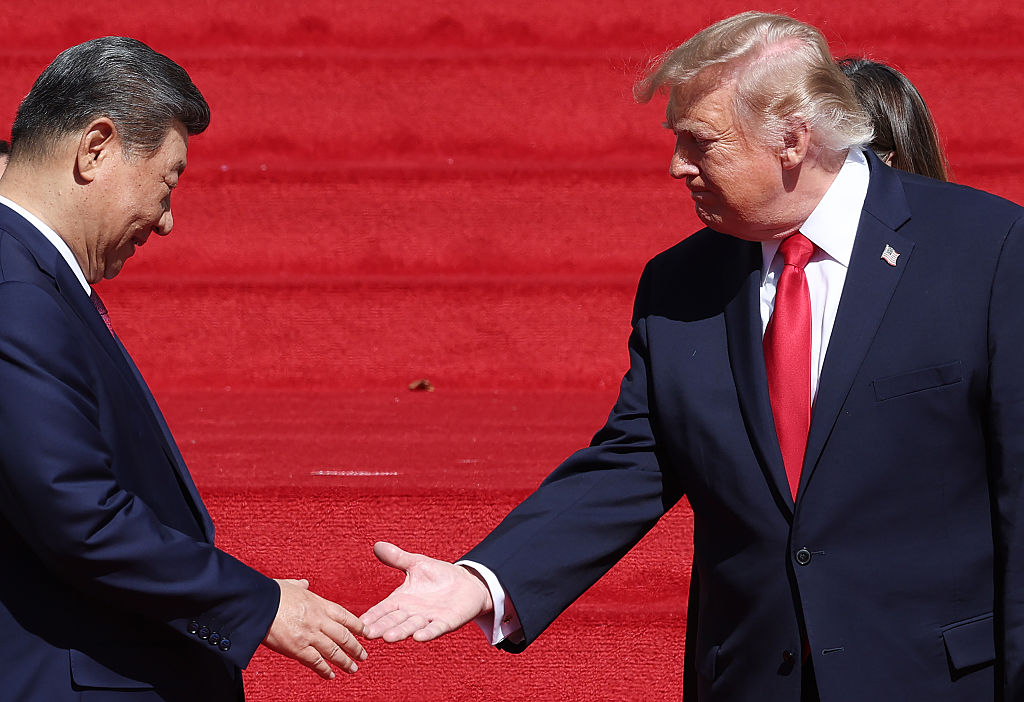



The Iran war entered its 32nd day on Tuesday as President Donald Trump signaled the U.S. will not move to reopen the Strait of Hormuz, which Iran closed after U.S.–Israeli attacks on February 28.
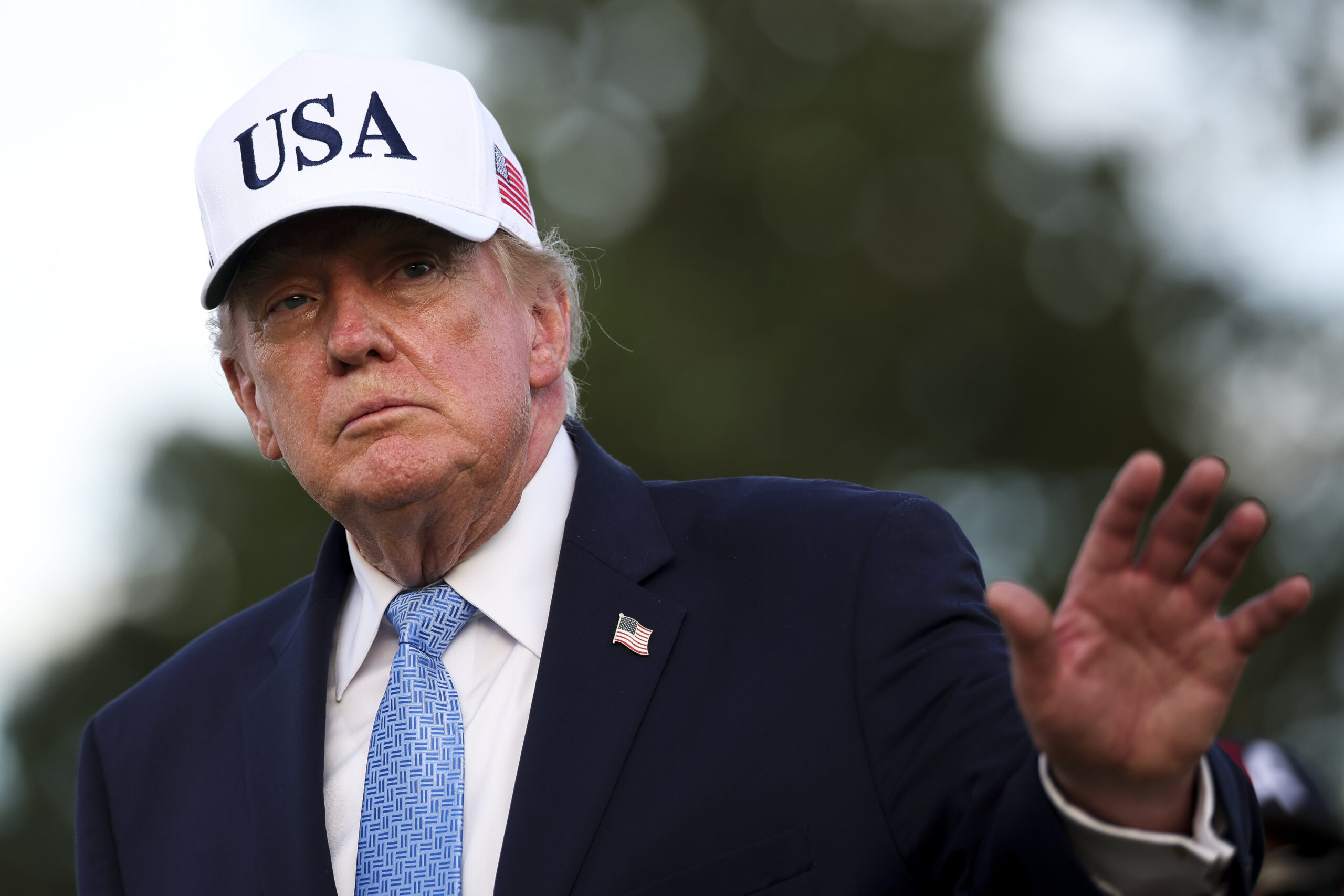
Addressing foreign governments affected by the disruption on Truth Social, Trump said countries that “can’t get jet fuel because of the Strait of Hormuz” should “buy from the U.S.” and “build up some delayed courage, go to the Strait, and just TAKE IT.”
“You’ll have to start learning how to fight for yourself, the U.S.A. won’t be there to help you anymore,” Trump wrote. “Iran has been, essentially, decimated. The hard part is done. Go get your own oil!”
In a separate Truth Social post on Tuesday, Trump singled out France for refusing to allow “planes headed to Israel, loaded up with military supplies,” to fly over French territory.
“The Country of France wouldn’t France has been VERY UNHELPFUL with respect to the “Butcher of Iran,” who has been successfully eliminated! The U.S.A. will REMEMBER!!!”
France is not the only country distancing itself from the American-Israeli war. Italy on Tuesday denied the U.S. use of its Sigonella base in Sicily; Italy’s defense minister said that the U.S. failed to request access in time for parliamentary approval.
Poland’s Defense Minister Władysław Kosiniak-Kamysz, meanwhile, said Tuesday that Poland would not relocate its Patriot defense systems to the Middle East, after a U.S. request to do so. “Our Patriot batteries and their armaments are used to protect Polish airspace and NATO’s eastern flank. Nothing is changing in this regard, and we have no plans to move them anywhere!” Kosiniak-Kamysz wrote on X.
The British Prime Minister Keir Starmer announced Friday that the United Kingdom agreed to allow the United States to use British military bases for strikes targeting Iran. The Financial Times reported that friction between the U.S. and the UK was on the rise, with Whitehall asking Americans to leave meetings where sensitive information is to be discussed and slow-walking American basing requests.
About 70 percent of shipping traffic through the Strait of Hormuz remains linked to Iran, Lloyd’s List Intelligence reported, as Tehran asserts control over the strategic waterway. Since March 1, there have only 188 transits total, down from roughly 135 per day before the conflict. Lloyd’s List said that all active Hormuz transits continue to use the Larak Island detour but that overall transit volume remains below 10 percent of normal levels. On Monday, the Kuwait-flagged very large crude carrier (VLCC) Al Salmi was struck by suspected Iranian drones off the coast of Dubai. The strike caused a fire that was later reportedly contained.
Fars News Agency reported on Monday that Iran’s parliament formally advanced their plan to impose tolls and new transit restrictions in the Strait of Hormuz, after the proposal was approved by the National Security Commission. According to Fars, the measure includes shipping security rules, Iranian rial–denominated toll regulations, and a ban on passage by U.S. and Israeli vessels. The plan also reportedly bars transit by countries participating in unilateral sanctions on Iran and envisions a legal framework involving Oman.
Gas prices continued to rise Tuesday, with AAA reporting the national average gas price at $4.02 per barrel.
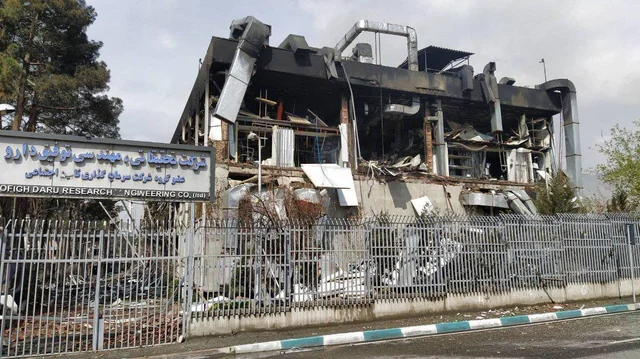
U.S.–Israeli airstrikes on Tuesday damaged one of Iran’s largest pharmaceutical producers, Tofigh Daru Research & Engineering, which manufactures anti-cancer drugs. Separately, Tasnim News Agency reported Tuesday that Iran’s U.N. envoy, Saeed Iravani, condemned recent strikes on major steel facilities in Isfahan and Khuzestan, calling them violations of international law and part of a broader campaign targeting civilian infrastructure.
Iranian missiles and drones struck the Sharjah industrial area in the UAE on Monday, with authorities confirming damage to an administrative building belonging to Thuraya Telecommunications. In a statement, the IRGC said four operations were executed early Tuesday as part of its 88th wave of attacks against American and Israeli targets. The IRGC claims that a container ship linked to Israel, the Express Halfong, was struck by ballistic missiles in the central Persian Gulf. Drones targeted a U.S. Marine gathering site in the UAE, destroyed a Hawk anti-drone system near Bahrain’s Manama Airport, and hit two early-warning radar systems at Ahmad Al-Jaber base.
Subscribe Today
Get daily emails in your inbox
The Financial Times reported Monday that a broker for U.S. Defense Secretary Pete Hegseth sought to make a multimillion-dollar investment in major defense companies weeks before the U.S.–Israeli attack on Iran, citing three people familiar with the matter. According to the report, Hegseth’s Morgan Stanley broker contacted BlackRock in February about investing in the asset manager’s Defense Industrials Active ETF. Hegseth’s assistant, Sean Parnell, called the allegation “entirely false and fabricated.”
Israel’s Defense Minister Israel Katz said Tuesday that Israel plans to raze Lebanese border villages and establish a new military buffer zone in southern Lebanon. In a video statement, Katz said “all homes” in villages near the border would be destroyed “in accordance with the Rafah and Beit Hanoun model in Gaza.” Katz said that 600,000 displaced residents of southern Lebanon would be barred from returning until Israel deems the area secure.
Haaretz reported on Tuesday that the Israeli military has for the first time confirmed an artificial intelligence infrastructure developed during the war in Gaza is now fully operational in current fighting in Iran and Lebanon. The system, known internally as the IDF’s “Operational Data and AI Factory,” integrates sensor, video, text and audio data into a single real-time operational picture across the military.
Read the full article here