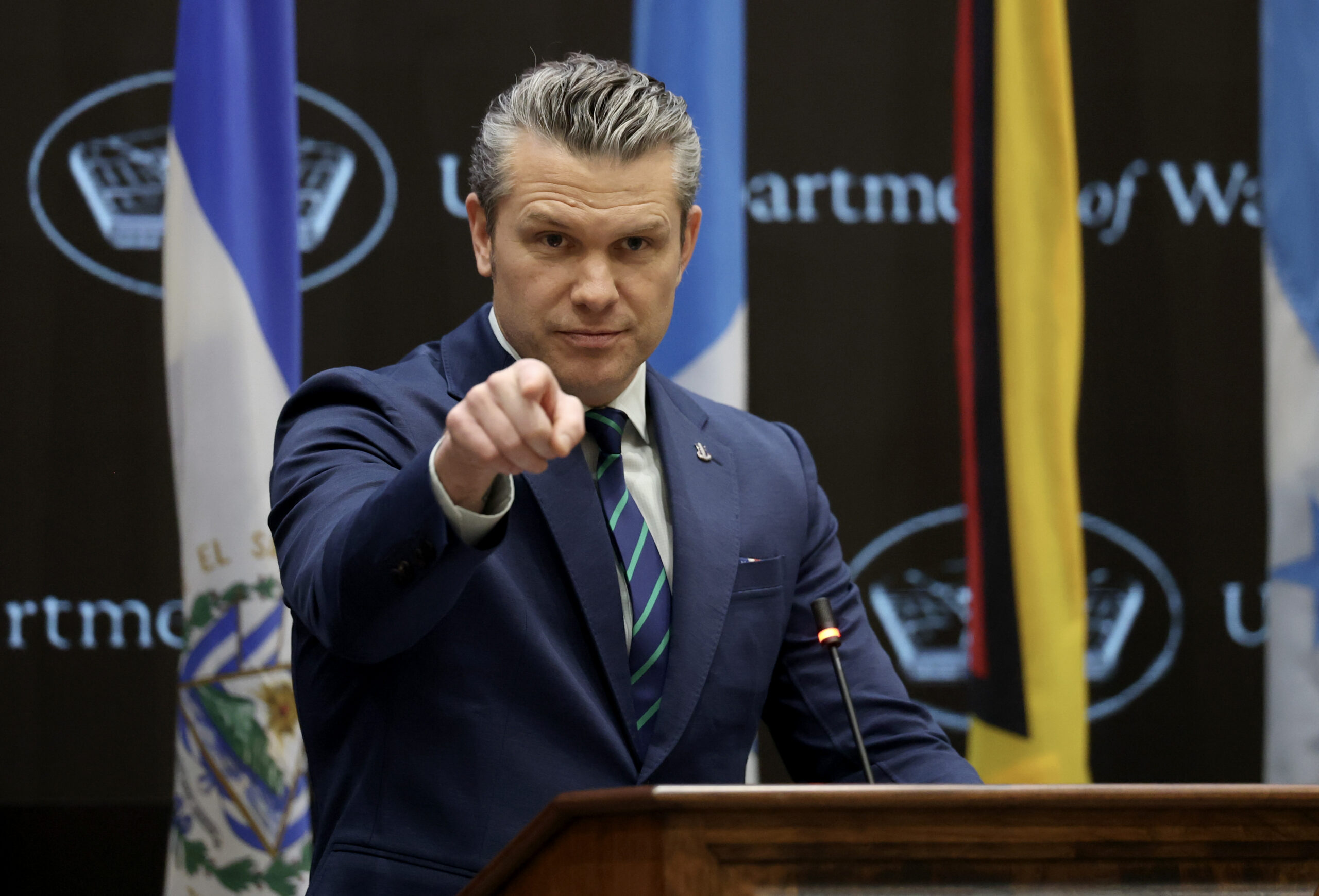


A ceasefire to the War in Iran entered its 53rd day on Saturday as Secretary of Defense said that President Donald Trump would be “patient” about signing a memorandum of understanding to end the conflict and open the Strait of Hormuz.
“He wanted me to reiterate how patient he is in ensuring that with America undertaking this kind of historic endeavour [the Iran war], any deal will be a good one. A great one,” Hegseth said in Singapore on Saturday morning.
Iran meanwhile reaffirmed its commitment to controlling the traffic through the Strait of Hormuz, with Iran’s Khatam al-Anbiya Headquarters warning Saturday that “any action taken by military vessels to interfere with the management of the Strait of Hormuz will make them a target for us.”
In a Truth Social post on Friday, Trump said Iran’s “enriched material” must “be unearthed by the United States… in close coordination and conjunction with the Islamic Republic of Iran, plus the International Atomic Energy Agency, and DESTROYED.” Drop Site News, citing a senior Iranian official, reported last Friday that Iran would be willing to suspend enrichment above 3.6 percent for 10 years and dilute existing higher-enriched uranium inside the country under international supervision, but only at a later phase of any deal.
In the same post, Trump appeared to announce the end of the U.S. blockade of the Strait of Hormuz, writing that “Ships caught in the Strait due to our amazing and unprecedented Naval Blockade, which will now be lifted, may start the process of “heading home!” Trump also said that “no money will be exchanged” between the U.S. and Iran.
The New York Times, citing three anonymous U.S. officials, reported that the Trump administration is seeking alternative financing mechanisms in order to funnel money to Iran without direct payments.
Iran’s Tasnim News Agency has reported that the first phase of the memorandum of understanding would include the U.S. lifting the Hormuz blockade and waiving sanctions on Iranian oil during negotiations. The deal would also include “an understanding in which the end of the war on all fronts, including Lebanon, is emphasized.” In exchange, Iran would allow vessels to transit Hormuz at “pre-war levels” while retaining control over the waterway.
Bloomberg reported on Saturday that an Iranian ballistic missile struck Ali Al Salem air base in Kuwait, injuring five Americans who were active duty personnel or contractors, and destroying at least one $30 million U.S. MQ-9 Reaper drone.
Subscribe Today
Get daily emails in your inbox
Responsible Statecraft reported on Friday that a provision in the 2027 National Defense Authorization Act unveiled this week would fuse the U.S. and Israeli defense sectors across research, weapons co-production, and data sharing. Section 224 of the bill, titled the “United States-Israel Defense Technology Cooperation Initiative,” authorizes bilateral R&D projects, co-production of weapons, and AI and biotech joint licensing agreements. It also calls for “network integration” and “data fusion” between the two militaries.
Israeli strikes across southern Lebanon killed at least 14 people on Friday, while the IDF said it intercepted Hezbollah rocket attacks on northern Israel Saturday morning. Lebanon’s Ministry of Public Health said Saturday that at least 3,371people have been killed by Israeli attacks since March 2.
Brent Crude oil closed at $91.12 on Friday while gas prices remained elevated but also below recent peaks, with AAA reporting the national average price of regular gas at $4.36.
Read the full article here