

USAF Seeks Common Ground-Based Launcher
The The Air Force Life Cycle Management Center (AFLCMC) Command, Control, Communications, and Battle Management (C3BM) Directorate at Wright-Patterson Air Force Base (WPAFB), Ohio is has released a Request for Information to industry to identify viable solutions for a Ground-Based Launcher ground-to-air missiles. At this point there’s no formal requirement. Rather, the information provided by industry helps the Air Force paint a picture for itself of what is in the realm of the possible.
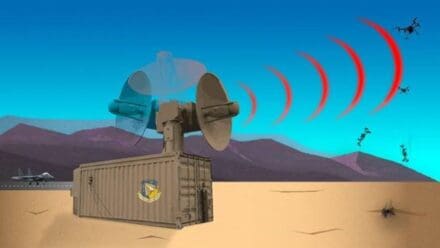
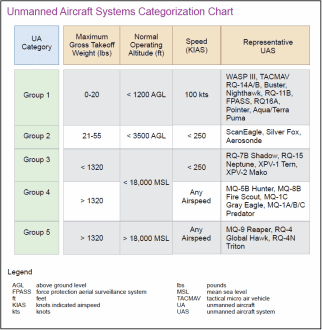
They want to be able to engage Group 1 to Group 5 Unmanned Aerial Systems as well as cruise missiles. This new capability will augment technologies like the the Tactical High Power Operational Responder system seen above which uses directed energy to defeat drone swarms.

They’ve listed Eleven Critical Baseline Attributes:
1. Munition Types
2. Integrated Sensor Capability
3. Laser Illuminator
4. Firing Rate (Total of All Magazines)
5. Magazine Depth
6. C2 System Integration – for dissemination of sensor data and weapon cueing
7. Bounding Price Point (Per System Cost)
8. Transportability
9. Manpower
10. Built-In Test (BIT)
11. Weapon System
In addition to the baseline attributes, the Air Force is asking industry how their proposed concepts balance platform integrated sensing capabilities and the operational requirement for the system to be rapidly deployable.
This comes on the heels of an announcement in late June by Air Force leadership that they were now planning to create a new counter-drone careerfield. Until this can be accomplished the June Corona determined that Point Defense Flights will be established at select AF installations.
While grounded in a real need for expertise in this emerging Warfighting skill, Air Defense of airfields had been left to the Army since 1948 due to the Key West Accords which delineated roles and missions to the military branches under the newly created Department of Defense.
However, during the GWOT, the Army allowed its Air Defense branch to atrophy and is just now reacting to the threat of FPV drones. As we saw during Ukraine’s Operation Spiderweb in Russia and the Israeli Operation Rising Lion in Iran, air bases as particularly susceptible to drone attacks, even in areas considered safe zones.
US bases and critical infrastructure have been regularly infiltrated by drones in the recent past. Fortunately, none of the CONUS incursions have been kinetic, but that’s not true in the Middle East.
With the Army’s assets stretched thin, this is hopefully the beginning of the Air Force assuming full responsibility for air defense of their activities.
Read the full article here