


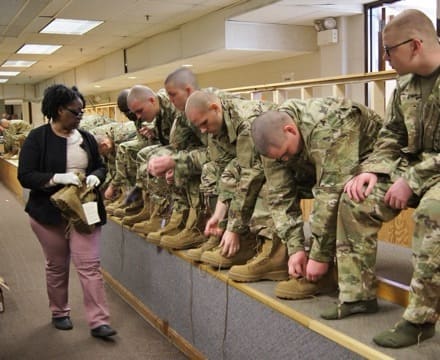
In a request for information recently issued to industry, the US Army DEVCOM Soldier Center sought out potential sources which will support the re-shoring of the domestic footwear industry, improve capabilities for the domestic military footwear industrial base, and ultimately provide the best performing footwear technology to the Warfighter.
Naturally, this effort won’t just improve the Army’s boots but those of every service as well as potentially commercial footwear manufactured domestically.
The reality is that the US has a small domestic footwear production capacity belated primarily on military procurement which by law requires US made goods. The Berry Amendment specifies that most textile goods purchased by the US military must be manufactured in the US using US materials.
Because the industry is so small and caters to military procurements it hasn’t kept up with technological improvements found in many overseas factories which are newer and must be responsive to changing materials and processes.
The military has been very slow to adopt those same material and manufacturing processes developed for commercial footwear, there’s no pay off for US based companies to make capital improvements. In fact, building a new, state of the art factory could result in failing to capture military contracts due to the inability to build to older specifications.
While the RFI is open to everyone, the reality is that companies who aren’t already building to US military specs and comfortable with low margins are going to be at a serious disadvantage.
Specifically, DEVCOM SC asked footwear manufacturers to identify possible gaps and process and/or equipment improvements to enhance domestic processing capabilities, which may be beneficial to future military footwear systems. This request is part of a research and development effort under the FY24 Congressional Military Footwear Research Initiative.
That last bit is a bit concerning. Two years later and they’re just getting to it. Our procurement system is going to have to move faster and become more responsive.
However, I am very excited about the focus of this effort:
- Increase domestic production capacity and adopt advanced manufacturing technologies to enhance productivity. Efforts should provide tangible improvements to footwear manufacturing processes.
- Re-shore critical footwear technologies and strengthen domestic production capabilities.
- Improve the cost-effectiveness, quality, or performance of military footwear.
- Implement flexible, automated, or digital manufacturing approaches adaptable to multiple footwear types.
As I mentioned earlier, the specification or Purchase Description for military footwear is pretty basic. The Army is asking for innovation but they don’t want to innovate their designs.
All proposed solutions must align with the project scope and the following constraints:
1. Product Compliance: The proposed manufacturing improvements must not alter the footwear’s design, materials, or construction in any way that would result in non-compliance with the applicable DoD purchase description. Any footwear prototypes delivered must meet all specifications of an existing purchase description.
2. Funding Limitations: Funding may not be used for capital expenditures, defined as purchases of long-term physical assets such as equipment, facility improvements, or tooling intended for full-scale production. Tooling used for short-run prototype production (e.g., lasts or molds), as well as consumables, prototype materials, labor, and short-term leases, are considered allowable project expenses.
I realize we facing a chicken or egg moment but that is what always holds the domestic textile industry back. The military wants a new capability but won’t specify it because it doesn’t yet exist in the supply chain. Industry won’t invest in modernizing their factories unless there’s a solid demand signal from their customer. Delays ensue and stack up. Before long, we are decades behind the international industry standard.
Finally, I’d like to point out that two boots for specialized environments are not included in this effort, the Army Extreme Cold Weather Boot (often called the “Bunny Boot”) and the Army Jungle Boot The purchase descriptions and technical requirements for these specific platforms are under revision, making them unsuitable for this initiative.
Read the full article here