


Surge Capacity: How Anduril Delivered a Month of Production in a Week
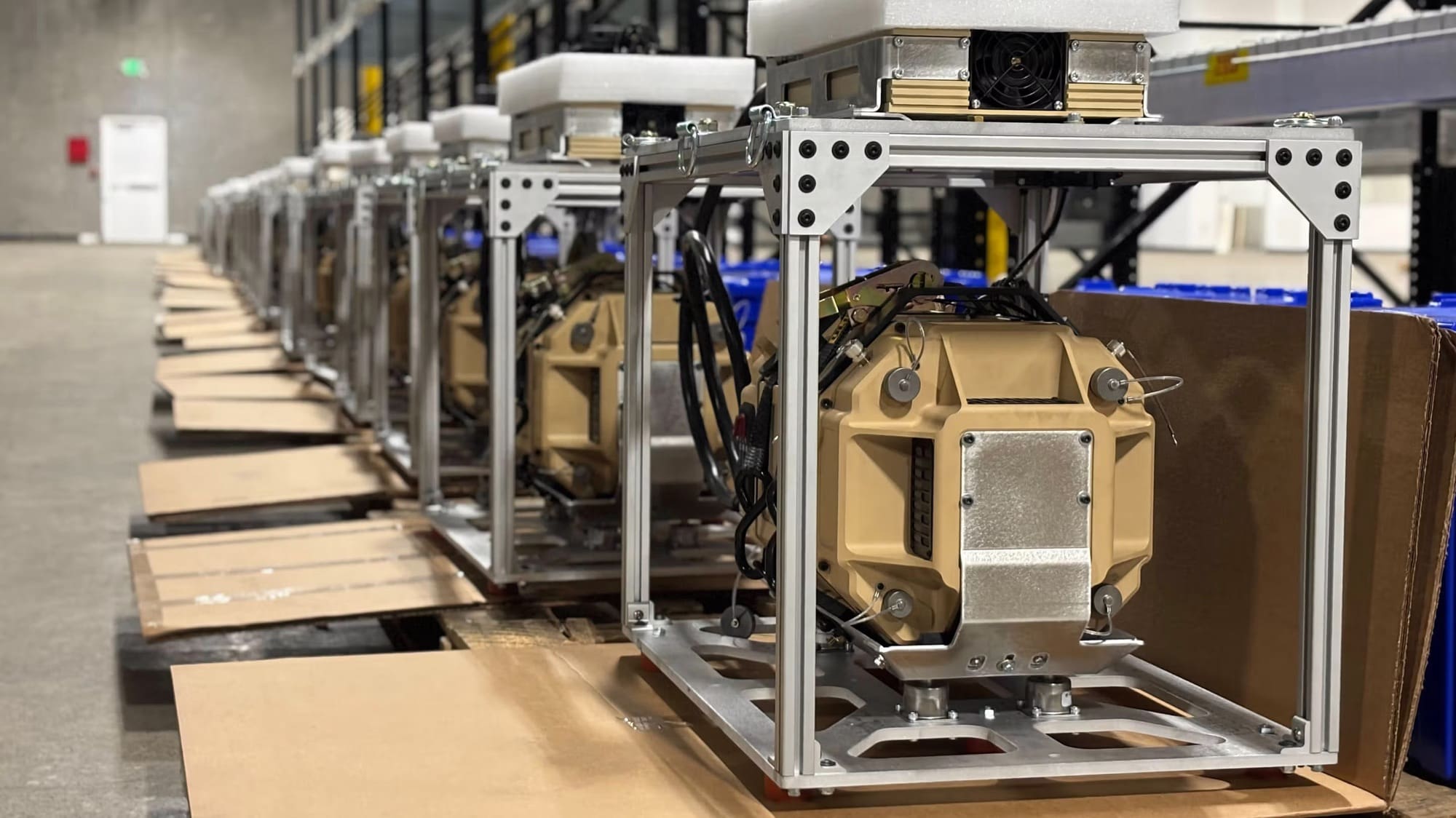
In under a week in March 2026, Anduril delivered more than a full month’s of Pulsar production output off the shelf and directly into active operations for two U.S. government customers. These systems were immediately installed for fixed-site EW protection and aircraft survivability. While the surge was underway, Anduril was already doubling its EW production capacity — a line that once delivered 500 Pulsars per year now delivers 1000.
Anduril built Pulsar to interrogate a wider range of the electromagnetic spectrum autonomously, deploy software updates in hours rather than months, and network multiple EW systems across distributed operations to optimize coverage, locate points of interest, and deliver coordinated effects. That architecture is a force multiplier. Conflicts in Ukraine and the Middle East have validated the approach — drone-saturation tactics in both theaters have exposed how quickly EW countermeasures need to adapt, and how rapidly traditional systems fall behind when they cannot update in the field. Electronic warfare is increasingly key to either enabling their success on the offensive, or defeating them on the defensive. Since 2022, the Pulsar family has been deployed with operational users across multiple continents in fixed-site, mounted, and airborne configurations — all variants proven in combat and updated continuously based on user feedback.
Anduril built its manufacturing infrastructure with the assumption that demand would not announce itself in advance, and that when it arrived, achieving throughput in weeks, not quarters, would be necessary. A production line that can absorb a massive surge mid-scale-up while simultaneously doubling annual output is not the kind of capacity traditionally available within the defense industrial base.
Deterrence is ultimately a production problem. Anduril will solve it by focusing on the factory.
Read the full article here