


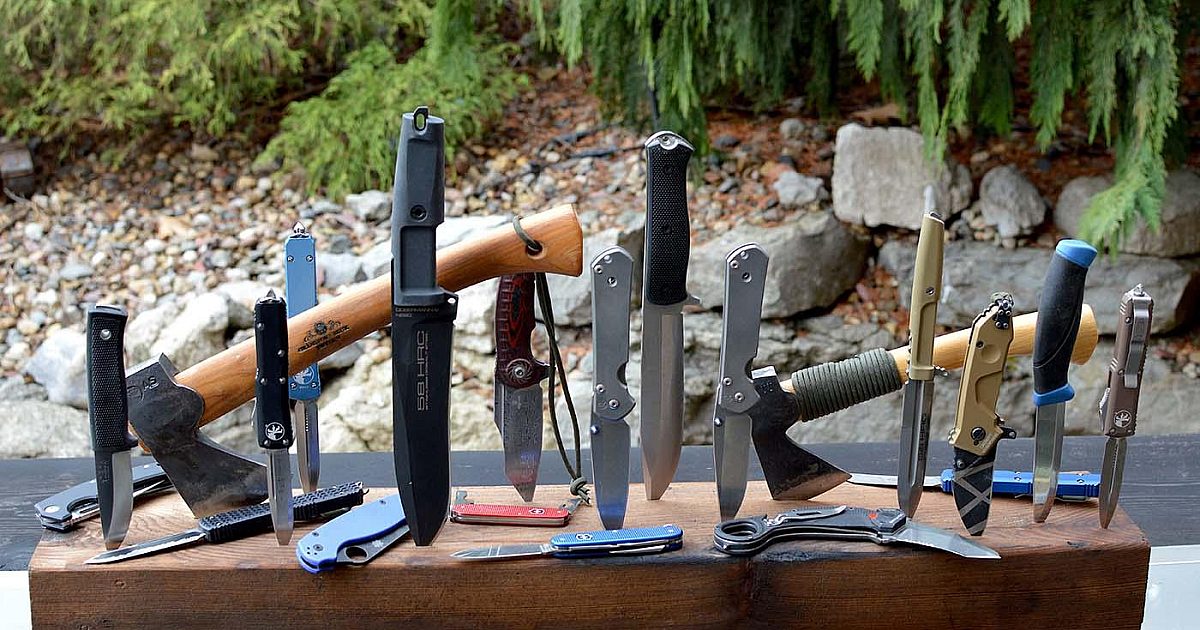

Premium knives have become identity products for millennials and Gen Z just as they did for Gen X. Retailers focused only on entry-level, price-point-driven knife sales may be missing the category trend. In gun terms, this is not selling Glocks — this is selling Staccatos.
Younger 18+ buyers are not just buying a knife to slip into a pocket to open boxes. Folding knives, fixed blades, multitools, axes, and even machetes have become part utility tool, part collectible, and part status symbol. Buyers are increasingly willing to pay for premium materials, craftsmanship, and brands that signal both performance and identity.
This is not a new pattern. Gen X entered through the tactical-knife boom and matured from entry-level purchases into premium and limited-production knives. Today, premium production brands start in the $200 to $500 range, while some models from makers such as Microtech, Strider, and others can move well beyond $1,000. Millennials are already deep into this mindset, and Gen Z is reviving the front end of that cycle through EDC, preparedness, and a growing appetite for premium blades. The hang-packed $39.99 value folder is no longer enough for a meaningful segment of the market.
Trends That Support Sales
There is no single survey showing that one generation bought knives first and guns second in a strict sequence. But when you line up the data and timing of the tactical-knife boom, the later rise of the protection-driven firearm market, and the generational waves moving through both, the pattern becomes hard to ignore. Firearm buyers start in some way in the knife market and continue the buying behavior over their lifetime.
Gen X came of age during the original tactical-knife expansion of the early and mid-1990s, when knives were becoming a mainstream expression of preparedness, utility, personal defense interest and status. Older millennials have now matured into this market, while younger millennials and Gen Z are just beginning to move into the same mindset as they settle into careers, homes, parenthood, and steadier disposable income. Their formative buying years have overlapped with a period in which outdoor lifestyle, everyday preparedness, and self-defense have become more visible and more normalized parts of consumer behavior.
That matters because the current trend is not just about buying more knives. It is about buying better knives and aspiring to own premium brands. Buyers move upward into premium steels, better ergonomics, stronger design language, improved fit and finish, and brands that signal quality, performance and status. In other words, the same buying pattern that first pulls consumers into EDC and preparedness culture transitions to drive ongoing growth in upscale and premium knife sales.
It matters for retailers because a large number of knife buyers are, or eventually become, firearms buyers. Building loyalty early matters. The customer journey often starts long before the firearm purchase, and retailers who recognize that sequence can capture more demand, more store visits, and often better margin through knives, tools, and preparedness gear along the way.
The other obvious point is that premium knife brands are expensive and higher margin than firearms. Premium knife buyers clearly have disposable income to spend that could be easily transitioned to many other retail products.
Trends like this tend to repeat because consumers rarely begin at the end of the journey. They usually mature into the category through a broader concept of outdoorsmanship, self-reliance, preparedness, utility, or personal defense, and for many, that path starts with knives. Knives are practical and utilitarian, but they have also become collectible status symbols that can be carried nearly everywhere, every day. That combination makes them one of the easiest products to justify and one of the most natural gateways into broader readiness and defense culture.
For retailers, the lesson is simple: this is not just about stocking knives. It is about stocking better knives and other cutting tools like multitools, axes, and machetes with brands that stand out from the crowd. As younger buyers move from first purchase to enthusiast purchase, premium brands offer a chance to capture stronger margin, more repeat business, and a customer who is increasingly buying for identity, performance, and craftsmanship, not just utility.
Premium Brands That Stand Out
Entry-price and broad-distribution brands such as Benchmade, Spyderco, Boker, CRKT, Kershaw, CIVIVI, SOG, and Gerber are everywhere, from small gun shops to big-box retailers, and it is extremely hard to be competitive or have differentiation. Many of these brands are also sold through military exchanges at pricing independent dealers cannot match. The better strategy for many retailers is to lean into proven premium-tier brands, especially those with tighter distribution and stronger specialty-store appeal. If there is a call for these broad-distribution brands, consider only stocking the limited edition/release models for exclusivity.
Chris Reeve Knives — $325–$600
Chris Reeve is the benchmark for the customer who wants a true premium hard-use status symbol, not just a higher price tag. Tight tolerances, titanium construction, elite steels and legendary models make this a credibility brand for serious buyers willing to pay for refinement, reputation, and long-term ownership value.
Extrema Ratio — $250–$600
Extrema Ratio anchors the premium tactical end of the category with Italian style. Made in Italy and positioned around military, law enforcement, rescue, and hard-use field performance, it brings true tactical identity and heavier-duty appeal to the case with some tasteful Italian style.
Fallkniven — $100–$800
Widely considered the peak tier of survival knives, Fallkniven brings a different kind of premium credibility: Scandinavian heritage, proven outdoor performance, and a reputation built around survival, hunting, and hard-use field knives. For retailers, Fallkniven is a strong bridge between premium outdoor utility and serious preparedness, appealing to buyers who want high-end performance without the overtly tactical styling of some competing brands. It adds depth to the assortment by serving the customer who values function, steel quality, and long-term reliability first.
Microtech — $325–$1,500
Microtech is premium tactical energy at full volume. Known especially for OTFs and iconic models like the Ultratech, it delivers collectability, recognizable brand cachet, and strong appeal for customers who want engineering, action, and status in one knife.
Pro-Tech — $165–$700
Pro-Tech sits in a very attractive lane: premium American-made automatics and manuals with small-batch production and a strong factory-quality story. It works for the buyer who wants something premium and tactical, but with a more refined and collectible feel.
Zero Tolerance — $240–$500
ZT is one of the easiest premium upgrades for a retailer to explain. Premium materials, USA-made positioning, and hard-use EDC credibility make it a strong bridge between mainstream premium and enthusiast premium.
LionSteel — $100–$500
LionSteel gives retailers a distinctly Italian premium story centered on design, machining quality, and upscale materials. It appeals to the buyer who values aesthetics and manufacturing sophistication as much as pure utility.
MKM – Maniago Knife Makers — $120–$200
MKM offers heritage, collaboration value, and modern European styling. It feels upscale without being overexposed and is a strong fit for customers who want premium EDC with individuality and a very limited distribution that makes it feel like a one-off custom brand.
Fox Knives — $75–$500
Fox is versatile enough to play in tactical, outdoor, military, and hunting lanes. It offers premium European credibility and broad appeal for retailers who want one brand that can cross multiple customer types.
Premium-Adjacent Pickup Brands and Tools
Not every profitable add-on has to be a $400 folder. Retailers also benefit from low distribution premium-adjacent brands that are easier-to-pick-up items, great gifts, or authentic heritage tools that broaden the assortment without dragging it back to commodity.
Victorinox Alox Models — $48–$100
Standard Victorinox may be too broad for this conversation, but the aluminum Alox handle line is the exception. Limited editions, refined finishes, and collectible appeal give Alox a far more upscale story than the traditional plastic-handled red Swiss Army knives. Stores that sell the unique Victorinox knives can have a very fast inventory turn.
Morakniv — $20–$150
Morakniv is not a luxury premium, but it is one of the smartest “easy pickup” and gateway brands in the category. Its Swedish heritage, authenticity, and real-world bushcraft credibility give it far more trust than its price would suggest. The color options make it fun and add pop to your otherwise black and tan shelves.
Opinel — $22–$60
Opinel brings heritage, elegance and everyday usefulness. It is less tactical than the rest of the lineup, but that is exactly why it matters. Opinel is simple elegance at an impulse purchase price that screams let’s go on a picnic, have some wine and build a fire. It broadens the assortment, serves gift buyers, and reminds customers that premium does not always have to mean aggressive.
Gränsfors Bruk Axes — $190–$400
The premium axe and backwoods survival axe brand, period. Hand-forged heritage, visible craftsmanship, razor-sharp edges, and long-term ownership appeal make Gränsfors Bruk a perfect extension of the same premium-tool mindset that drives knife trade-ups. It is literally the buy-once-and-pass-down-to-your-great-grandchildren level of quality.
Tramontina Machetes — Under $30
If Chris Reeve and Extrema Ratio represent the premium end of the blade market, Tramontina represents something just as important: the globally familiar working standard. Tramontina machetes bring authentic utility, fast recognition, and a low-barrier purchase that almost sells itself to customers who want a real machete, not a novelty. Merchandised correctly, they can be fast-selling, full-margin add-ons.
The Retail Takeaway
The opportunity here is bigger than knives alone. It is about understanding where customers begin, how they mature, and where margin grows. Consumers often start with something practical they can carry every day. From there, many move into better materials, better design, and better brands. Some move deeper into preparedness, outdoor gear, firearms, or all of the above.
The brands that stand out today are the ones that give customers a reason to trade up: better steels, better fit and finish, limited distribution, stronger identity, or more authentic heritage. Retailers who understand that shift can capture stronger margins and more repeat business than those still relying only on entry-level price-point products.
EDC may be the gateway, but premium knives are the upgrade. And for retailers paying attention, that upgrade path is where the opportunity is.
Read the full article here
