


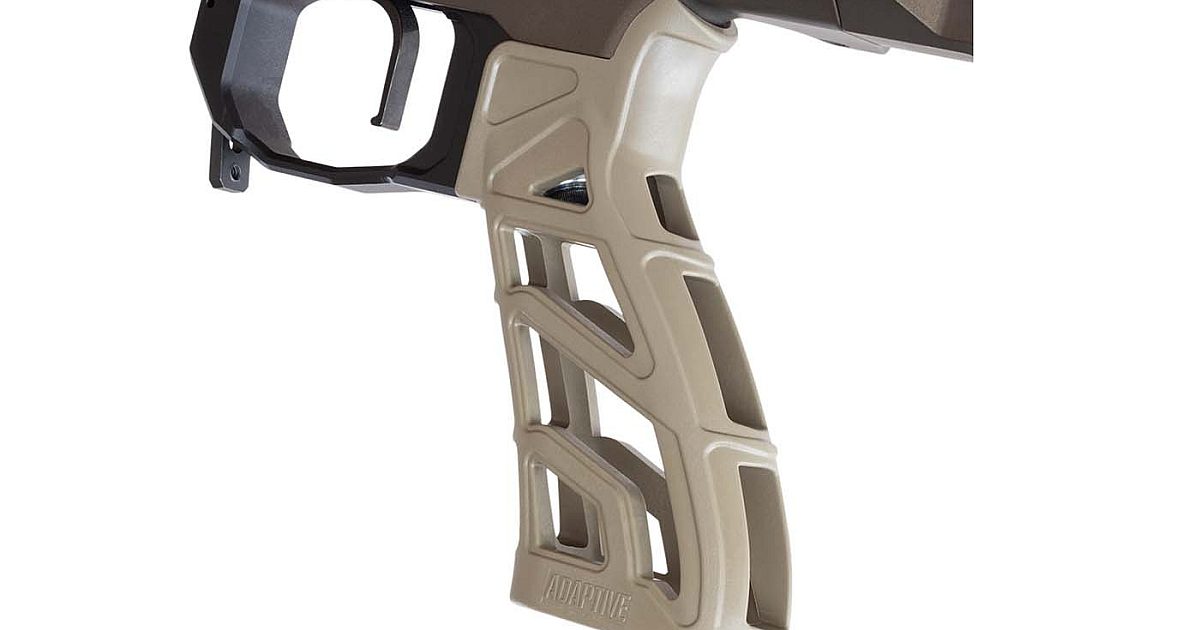

The best services are simple, fast and familiar. Those that encompass items already in your inventory are ideal and get even better when a simple mention of the aftermarket items — punctuated by a free-installation offer — taps the passion of an enthusiast who never considered the advantages.
Today’s precision rifles present that kind of countertop opportunity. Many of their designs are modular, allowing the owner to customize things that, in the not-too-distant past, were integral to the stock. Alteration traditionally required a gunsmith’s intervention.
That’s no longer true, at least not on the variety of popular rifle chassis systems currently available. The steps in replacing their pistol grips are, for example, often identical to the process on an AR. Comfort, repeatability and familiarity can enhance precision, and some enthusiasts find grips with a profile more vertical or hand-filling best for their shooting style. It’s easy to overlook that sales potential in a modern sporting rifle world traditionally more focused on home- and self-defense than tiny groups at long distance.
This service is familiar and simple, and because they are identical to those designed for ARs, you already have the required single tool and a nice inventory of aftermarket options.
The latter is also available in enough colors, finishes, styles and materials to promote impulse buys. Adding a few to your shelves — in a conspicuous place — won’t drain a budget. You never know when a customer taking a new gun home will decide to personalize immediately with a skeletonized version, add flare or enhance the feel. There’s also the fact a customer’s trusted rifle often gets upgraded and sometimes needs a replacement part.
As mentioned, the process is simple, fast and familiar and can be completed quickly at the counter. It starts with the basics.
Keep the rifle pointed in a safe direction and engage the safety if it is not already in that position. Then remove the magazine and place it away from your immediate work area.
It’s a good idea to take the rifle’s bolt completely out at this point. It’s not mandatory, but the handle has a habit of moving and getting in the way during this process.
Look inside the chamber and ensure no cartridge remains. Double check, using a flashlight if necessary or feeling inside.
Open the pistol grip selected by the customer. Inventory parts and check for imperfections that might impede installation or fail to meet the gun owner’s satisfaction. Consult manufacturer’s instructions. If there are any at all, they will be minimal.
Rotate the rifle upside down. A long 3/16-inch Allen wrench — preferably a T-handle version — is needed to remove the bolt that affixes the pistol grip to the chassis. A flashlight or bright light makes indexing the tool into the bolt fast.
Insert the wrench, loosen the bolt fully and the original pistol grip can be removed. They fit snuggly on the chassis, so some gentle rocking back and forth — while maintaining upward pressure — is usually required.
Inspect the mounting surface for dirt and debris after the grip is removed. Clean if necessary to ensure the new version goes on smoothly without marring the chassis.
Work the new pistol grip onto the gun. To avoid the frustration of the new bolt and lock washer — if one is provided — falling off the Allen wrench, rotate the gun until the new pistol grip cavity is oriented slightly down. That way, gravity holds them onto the Allen wrench as you insert inside and tighten to manufacturer specifications.
Finally, shoulder the rifle, pointed in a safe direction, and apply pressure to the grip in multiple directions. Ensure it is secured tightly, wiggle-free.
When satisfied with the results, hand the gun to the customer to give it a feel. If they’re in agreement that it’s a nice upgrade, you’re ready to send yet another happy customer out the door. Don’t forget to mention the match loads you have in stock before they leave, though.
Read the full article here
